Manufacturers adopt Dynamics 365 Finance and Operations to consolidate legacy systems, improve visibility across the supply chain and create a single source of truth for financial, operational and production data. The platform supports integrated planning, reporting and decision making across the business.
For more than 60 years, Bremworth Carpets and Rugs has been part of the fabric of homes across New Zealand and Australia. A company grounded in craftmanship, natural materials and a belief in making things that last.
Every strand of wool comes from New Zealand farms, and each carpet and rug is made here too. It is a heritage the company is deeply proud of and one that generations of homeowners have trusted. Bremworth today stands as a premium New Zealand made carpet and rug company committed to elevating interiors through innovation and design.
The product remains true to its roots, but the world around it has evolved. Home design trends have shifted, economic cycles have tightened, and external pressures have challenged even the most resilient manufacturers.
For Bremworth, the opportunity is to stay competitive and future focused without losing the craft and character that define the brand.
A new CTO, and a shift in how technology supports the business
When Caio Diehl joined Bremworth in late 2024 as Chief Technology Officer, he found strong tools and strong teams, but systems that needed to work together more effectively.
“IT was playing a supporting role. But in a modern business, technology is the backbone for operations, planning, customer experience, sales, and data. I wanted us to shift from reactive to proactive, and from tools to impact and strategy.”
The Dynamics 365 journey so far
Bremworth had already laid important foundations before Caio joined. Over several years the business had been moving toward a single, integrated Dynamics 365 platform that would replace a collection of older systems and bring the supply chain, finance, operations, and customer channels together in a modern cloud environment.
The shift happened in stages. The company upgraded from AX 2012 to cloud-based Dynamics 365 Finance and Operations, introduced AP automation, strengthened support for yarn manufacturing and plant maintenance, enabled carpet and rug sales and distribution, and brought Microsoft Commerce into the B2B channel.
Caio stepped into this landscape with a clear focus on bringing the systems together in a more structured and purposeful way.
Clarifying the architecture
One of his first steps was to define the roles of the two key systems: Dynamics 365 Finance and Operations for planning and back-office processes, and the Manufacturing Execution System (MES) for day-to-day operations on the floor. Over time, the line between them had become unclear.
Operators were using the ERP for tasks that were better suited to the MES or taking notes on paper and entering the same data again later. This added work, slowed things down and created friction for teams in manufacturing.
Caio reframed the architecture so each platform could operate according to its core strengths, and then initiated strategic investments in key integrations that support Bremworth’s end to end processes and enable seamless data sharing across the business.
This idea of focusing on the scope and value of each system has become a core principle in Bremworth’s modernisation.
A long-standing partnership, now working with sharper focus
Fusion5 has supported Bremworth since 2018, providing capability and support at the levels needed over time. Caio wanted to refine how the relationship worked, aiming for Fusion5 to operate as an extension of his internal team.
“We’re a small team internally. When I look at our investment, Fusion5 is in effect half of my team - the external half. Continuity, trust, and shared understanding really matter.”
Caio believed the business already had what it needed. The task was not to start again but to get more value from what was there. He focused on aligning the partnership with the new architecture and priorities, and on creating a more open, pragmatic way of working together.
His guiding principle was consistent: Solve the real problem each time, not just the ticket number.
It has led to a partnership that works with more speed, more trust and the right expertise at the right time.
Modernising manufacturing
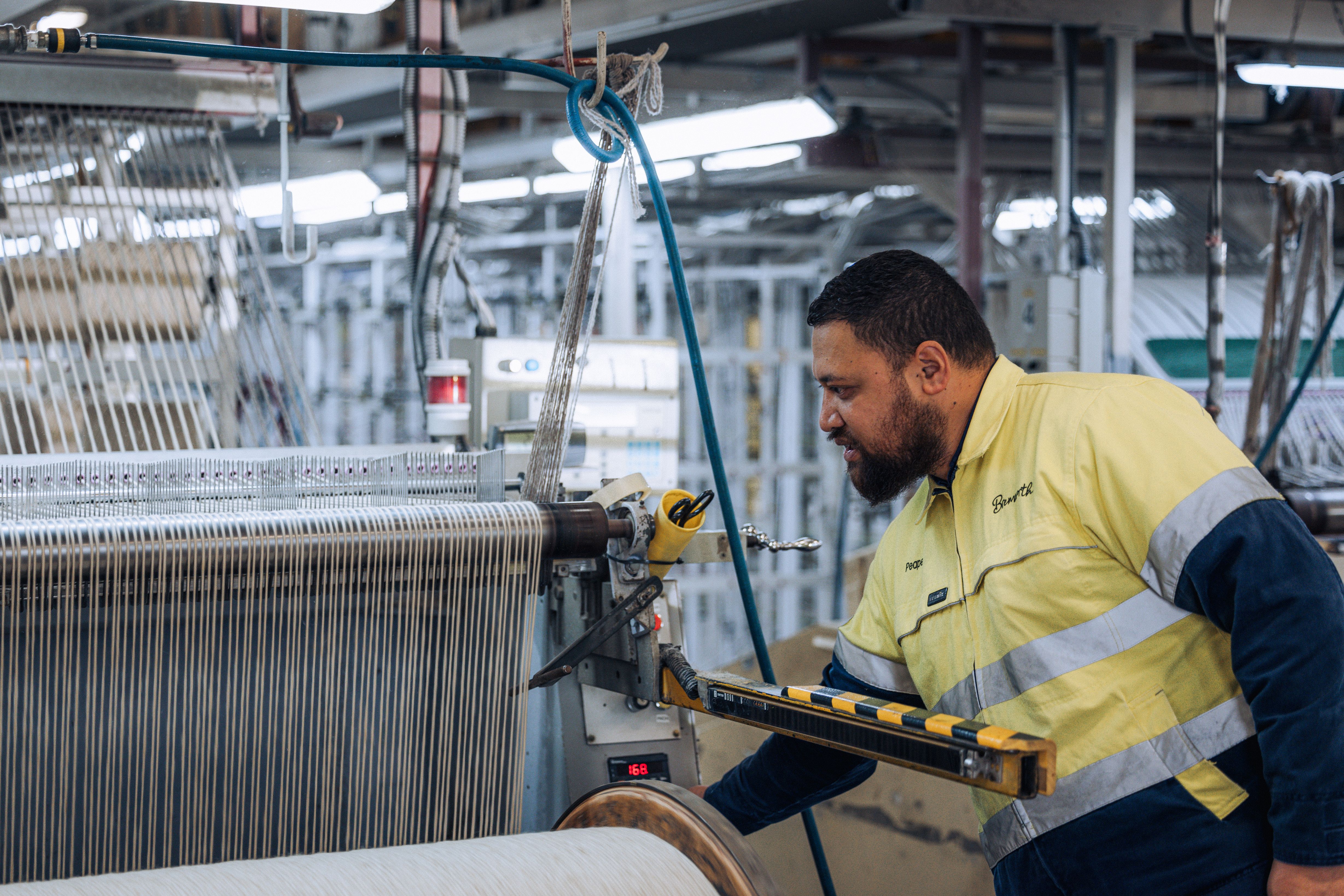
Manufacturing is the core of Bremworth, so it needs to run efficiently, reliably and with good visibility.
By approaching the work through a customer experience lens and ensuring systems are fit for purpose, the team has eliminated unnecessary hand offs and manual data entry and is simplifying core business processes. Operators will now use scanners that send real time production data directly into Dynamics 365. This improves planning, reporting and financial insight, and most importantly, gives employees a better experience with the systems they use.

Everyone is now working from one clear and consistent view of what is happening. And that simplicity is the point.
“We are not trying to make the floor fit the system. We are making the systems support how the floor actually works.”
The first major integration between the MES and Dynamics 365 is already underway, and the reinstatement of the Napier plant after Cyclone Gabrielle will be the first full test of the new workflow design.
Improving the experience for partners and retailers
Momentum is also building outside manufacturing.
The B2B ordering portal, relied on by retailer partners in New Zealand and Australia, had been a challenge for some time. The product backbone was strong, but the user experience was not.
Caio worked with Fusion5’s eCommerce and CRM teams to refresh the platform, and early feedback has been positive.
Partners are finding the experience smoother, and sales teams are seeing fewer issues and a more consistent channel for orders and tracking.
More enhancements are planned, including EDI integrations that will streamline high volume ordering and reduce manual work.
What is changing beyond the technology
Perhaps the biggest shift at Bremworth is not a new platform or a new screen. It is the way people think about technology and the role it plays in the business.
Where IT was once seen as a supporting function, it is now viewed as an active partner in improving how work gets done. Manufacturing teams say they feel listened to, and leaders across the organisation are more engaged and more trusting. Technology, which used to feel like a set of separate tools, is becoming a connected backbone that supports the whole business.
Caio sums it up simply.
“People can see we are closer to them. They can feel the progress, and they know we are working with them, not around them.”
A company ready for its next chapter
Uncertainty and disruption are part of business, and the companies that respond well often come through with a clearer sense of direction. That is the case for Bremworth. For decades it has designed and manufactured a premium product, and that commitment has not changed.
What is changing is the way the business is setting itself up for the future. By modernising its platforms, strengthening its data, improving customer and partner channels, and focusing on the core of the business, Bremworth is positioning itself to compete strongly and confidently in the years ahead.
Heritage gives Bremworth its identity, and technology is helping give it its future.

With a small IT team, having Fusion5 as a consistent source of capability really matters. We have all put effort into creating a way of working that removes friction and barriers, and the impact of that is clear."
Caio Diehl | Chief Technology Officer, Bremworth Carpets and Rugs Ltd

Tim Way | Content Editor
Tim spends time with tech leaders and customers to understand how transformation really plays out. He turns real-world examples into clear, practical content focused on what changed, what worked, and what others can learn.
Thinking about modernising manufacturing with Dynamics 365?
For manufacturers, modernising with Microsoft Dynamics 365 Finance and Operations can create a more connected, reliable and scalable operational backbone. By consolidating systems and improving data visibility across manufacturing, supply chain, finance and commerce, organisations can reduce manual effort, strengthen decision making and better support customers and partners.
From phased ERP modernisation and MES integration through to B2B commerce and data-led reporting, Dynamics 365 provides a platform that supports long term manufacturing performance. At Fusion5, we help manufacturing organisations modernise with Dynamics 365 in a way that respects existing operations while building for the future.
Q&A
Why do manufacturers move to Dynamics 365 Finance and Operations?
Can Dynamics 365 support complex manufacturing environments?
Yes. Dynamics 365 Finance and Operations is designed to support complex manufacturing scenarios, including production planning, inventory management, plant operations and integration with Manufacturing Execution Systems. It enables manufacturers to scale while maintaining control and visibility.
Why take a phased approach to implementing Dynamics 365?
A phased approach reduces risk and disruption by allowing organisations to modernise key areas of the business over time. This approach supports early value delivery, stabilisation of core operations and progressive extension into areas such as commerce, quality and human resources.
How does Dynamics 365 improve data visibility across manufacturing and finance?
By integrating manufacturing, supply chain and financial processes into a single platform, Dynamics 365 enables consistent, real time data across the organisation. This improves reporting accuracy, strengthens planning and increases confidence in operational and financial insights.
What outcomes can organisations expect from a Dynamics 365 implementation?
Organisations can expect reduced manual processing, improved data quality, stronger operational resilience and better alignment between manufacturing, finance and customer channels. A modernised Dynamics 365 platform also provides a foundation for future digital capability and innovation.


